
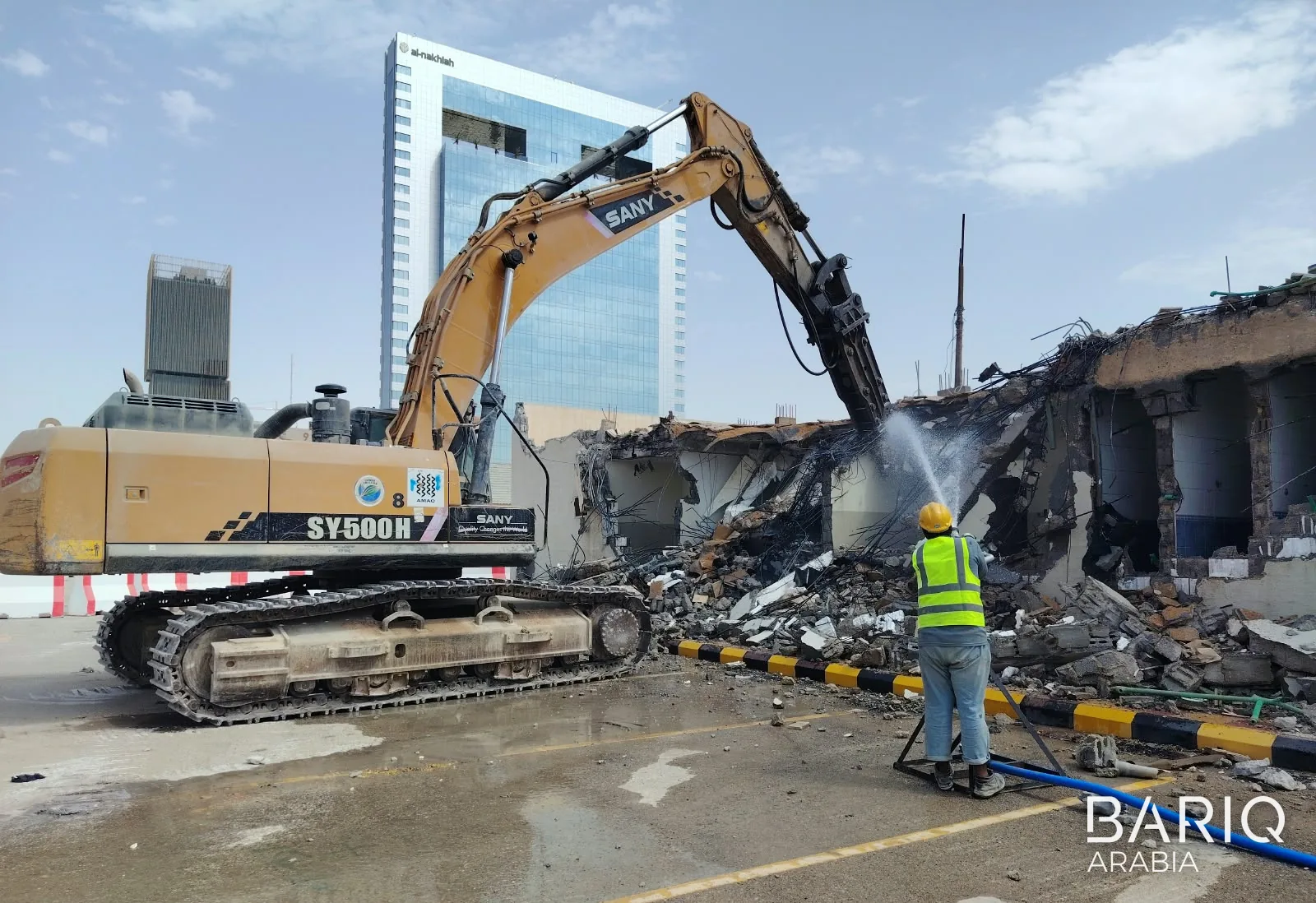
Building demolition and site clearance: what we take down
Structural demolition, partial and full
Reinforced-concrete and masonry buildings, boundary walls, kerbs and gate structures, taken down in a controlled top-down sequence.
Interior strip-out and fit-out removal
Architectural and MEP strip-out ahead of structural work, with each system isolated and decommissioned first and materials sorted into labelled skips.
Concrete breaking, coring and sawing
Selective removal of slabs, walls and foundations by concrete breaking, coring and sawing (concrete cutting). Where percussive breaking is restricted, the method statement specifies a lower-vibration method such as sawing, wire sawing or splitting.
Debris removal, haulage and recycling
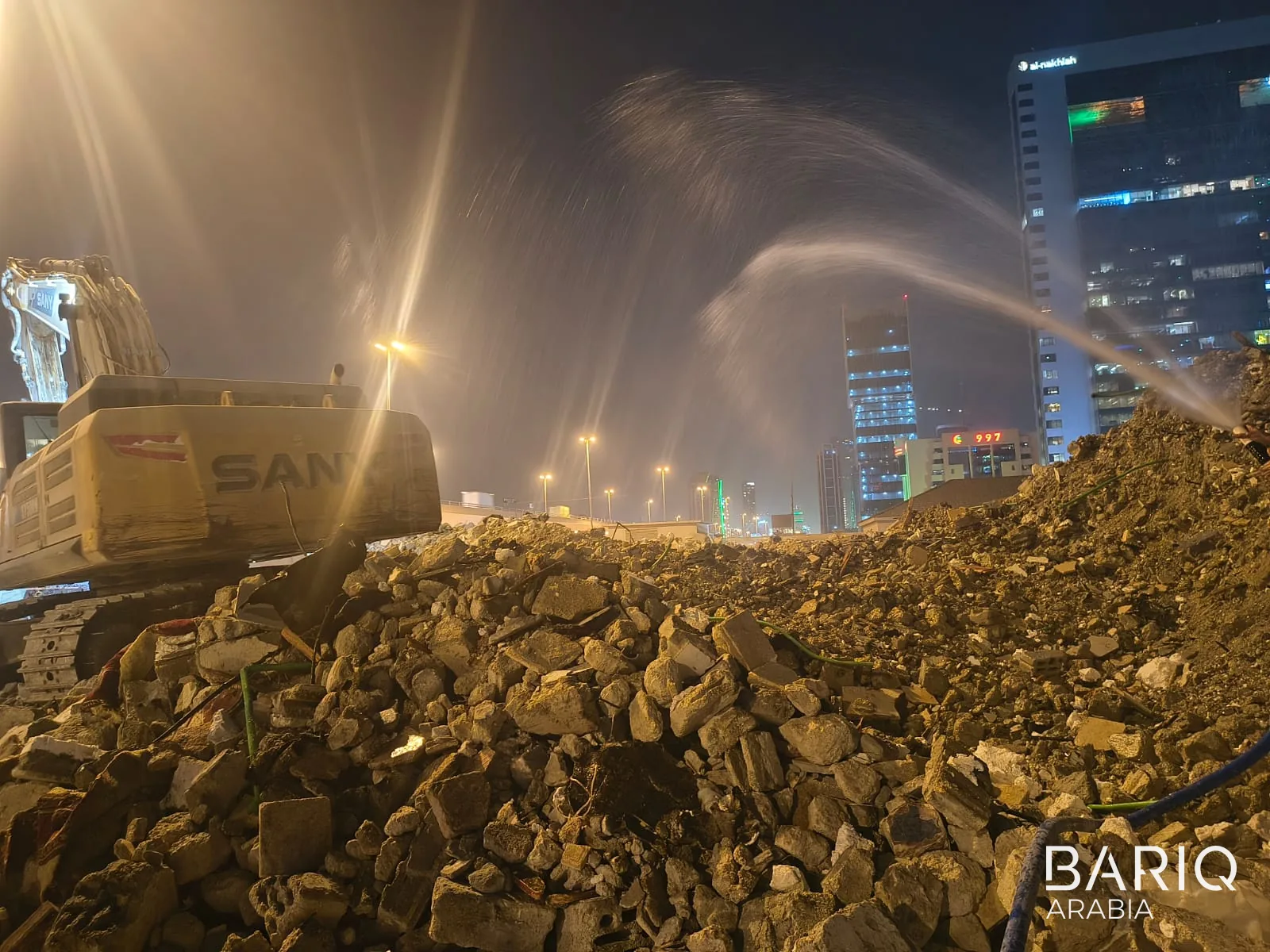
Concrete crushed on site for recycling where possible, rebar cut and separated, and remaining waste hauled to approved facilities.
Below-ground removal and backfilling
Foundations removed to the level the contract specifies, voids backfilled, and compaction test results submitted before handover.
Site cleaning and ground preparation
Grading and cleaning so the plot is handed over ready for foundations or the next contractor.
Villa, house and building demolition in Riyadh
- Villas, duplexes and old traditional houses
- Residential and commercial buildings
- Annexes, roof rooms and boundary walls
- Warehouses, shops and commercial buildings
- Partial demolition of part of a building, keeping the rest
We demolish residential buildings for their owners just as we demolish project structures: an old villa you want to rebuild, a traditional house, a residential block, an annex or a boundary wall. We handle the work from a free survey of the building to debris removal and a clean, levelled plot, and where agreed the value of recovered steel and scrap can be deducted from the demolition cost.
The owner applies for the demolition licence through an engineering office on Balady or the Riyadh Amana portal; our demolition licence guide explains the steps, timing and fine.
Structural demolition and concrete breaking: how we choose between breaking, coring and sawing
As a structural demolition contractor in Riyadh, we take down reinforced-concrete frames, slabs, beams, columns and foundations in the sequence set by the method statement, keeping the remaining structure, the public and the neighbouring buildings protected at every stage. For each element we choose the method:
- Hydraulic breakers for mass removal of slabs, walls and foundations where percussive breaking is allowed.
- Core drilling for clean round openings.
- Wall, floor and wire sawing for straight, controlled cuts and thick sections.
- Hydraulic splitters and wire saws where noise, vibration or nearby structures restrict percussive breaking.
The method follows the surroundings, the structure and the approved method statement. Our guide to concrete breaking, coring and sawing explains when each is used.
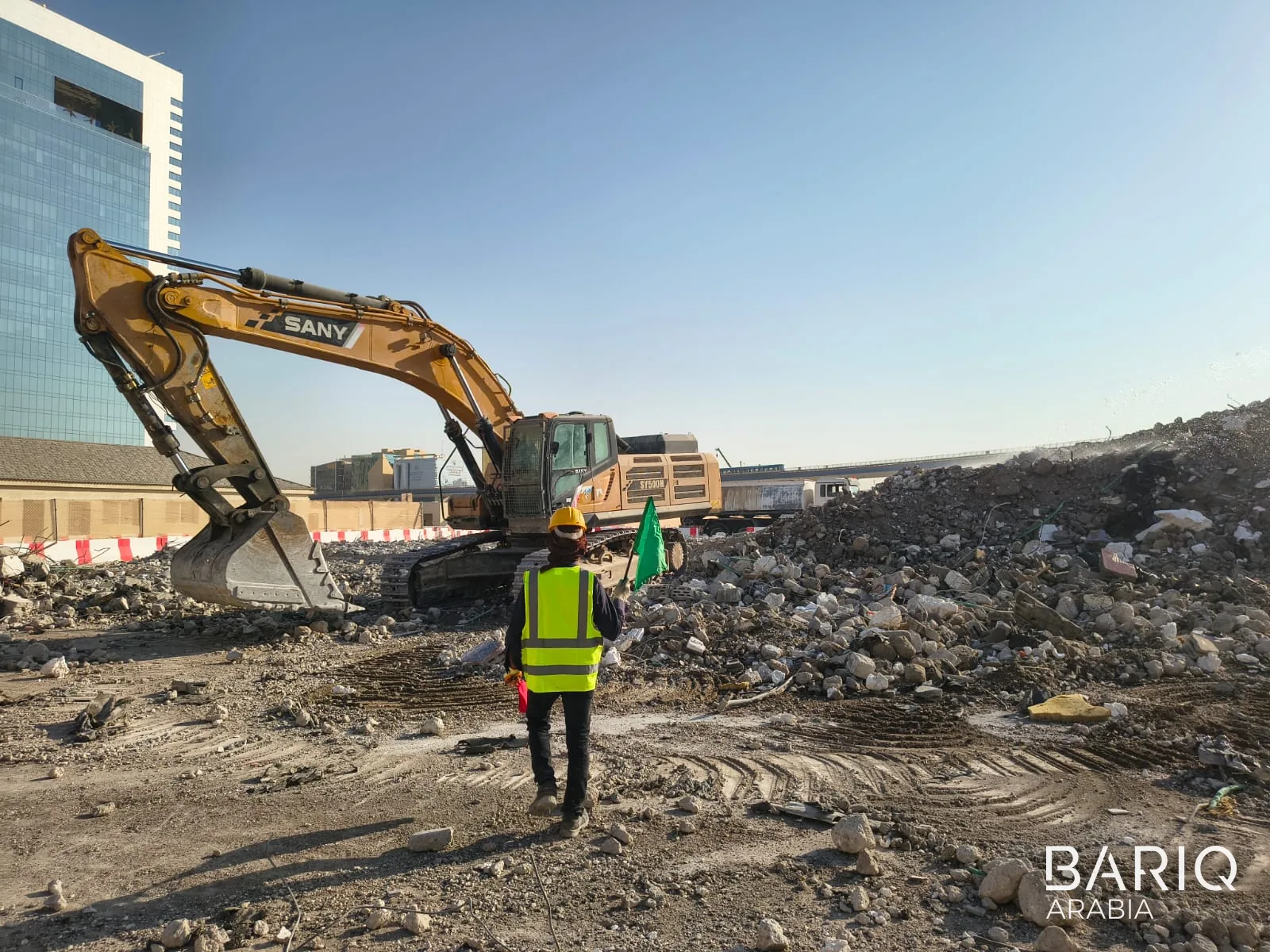
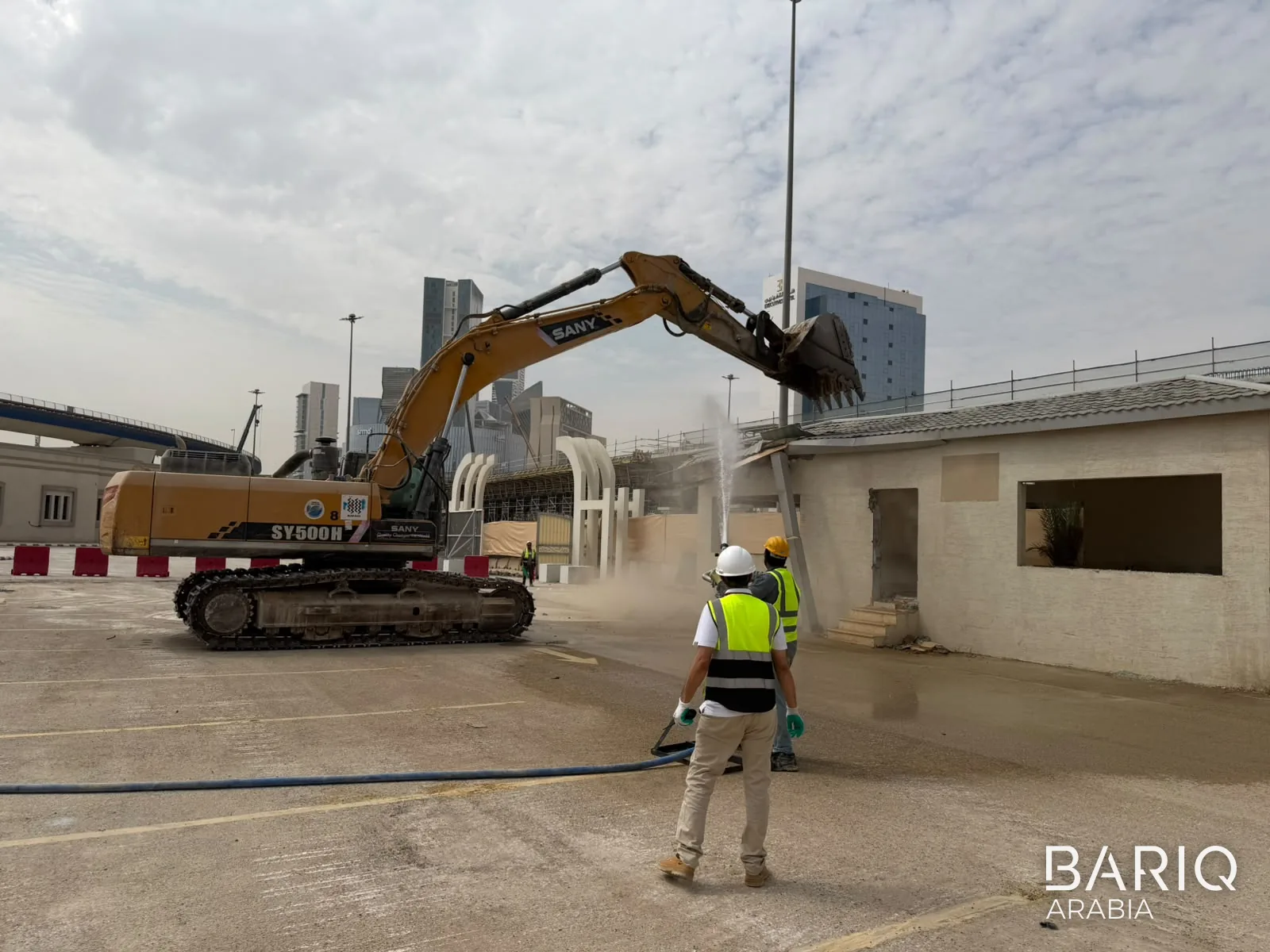
How a demolition job runs
Survey and planning
Site review, a pre-demolition structural assessment of each building, a hazardous-materials survey, and underground utility identification before any below-ground work.
Approvals
Method statement and risk assessment approved by the consultant, utilities isolated, authority approvals obtained and permits to work issued.
Site set-up
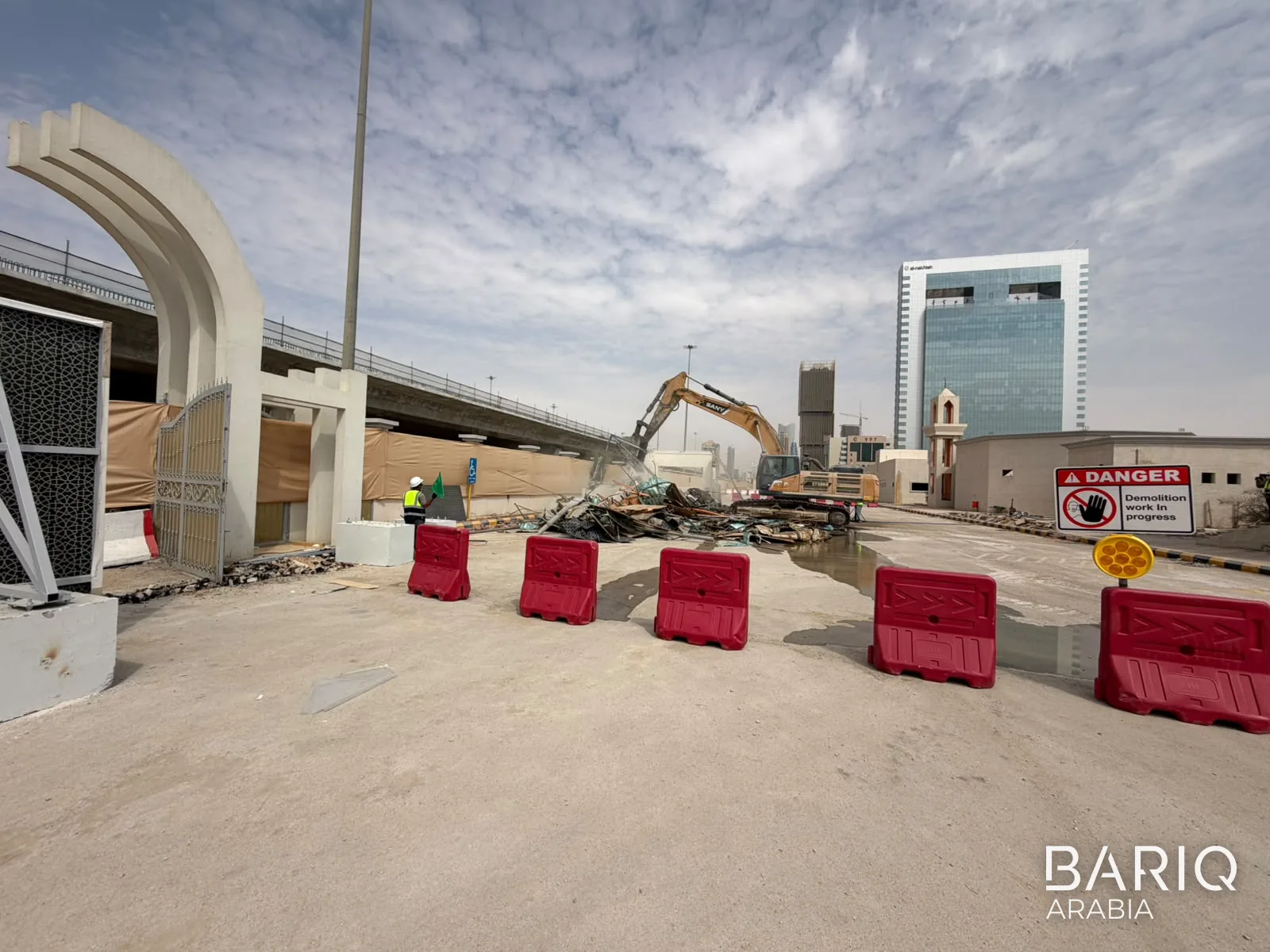
Perimeter hoarding, an exclusion zone sized to the structure height with barriers, signage and flagmen, and traffic management where the site meets a road.
Strip-out
Interior and MEP strip-out, separated by material, ahead of structural demolition on the same floor.
Controlled demolition
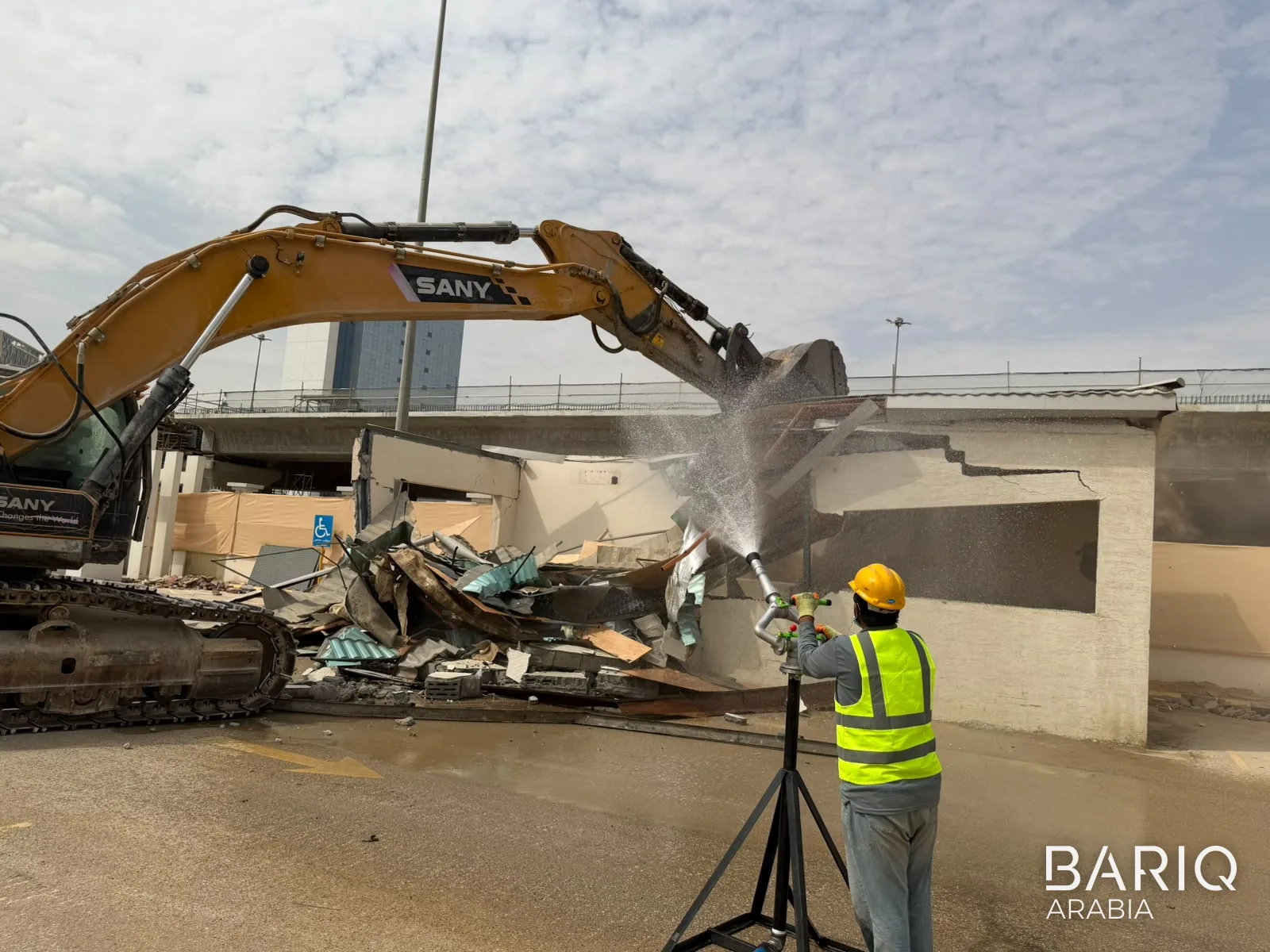
Top-down from the upper levels, with large elements lowered rather than dropped, water misting at active faces, and vibration and noise monitored where the consultant requires it.
Clearance and handover
Debris removed, ground graded and backfilled, records submitted, and a clean site handed over.
Safety and environmental control
Demolition is the highest-risk part of site preparation. These controls are part of every scope, not extras.
- Safety management certified to ISO 45001, with a full-time HSE officer on site and a NEBOSH-qualified officer on major projects.
- A permit-to-work system for high-risk activities, and stop-work authority for every person on site.
- Dust suppressed with water misting at active faces, with the site hoarding acting as the primary dust barrier.
- Waste sorted by stream, with diversion reporting and a waste log for the engineer where the contract requires it.
- If asbestos or an unidentified hazardous substance is suspected, work stops, the area is isolated and the engineer is notified. Hazardous waste leaves site only through licensed contractors, with transfer notes retained.
- Environmental management certified to ISO 14001 and quality management to ISO 9001.
Built for owners and project teams
- Owners of villas, houses and residential buildings demolishing to rebuild or sell
- Main contractors preparing sites for new construction
- Developers repurposing existing buildings or land
- Government entities clearing structures for redevelopment
- Consultants and project management teams who need a documented, approvable method
Demolition with hoarding and site clearance
We can take demolition together with perimeter hoarding, clearance and handover as one package, under one contract and one point of responsibility.
Enabling works and site preparationRelated guide
Riyadh Site Scope & Compliance Estimator
Select your scope to view mandatory municipal standards, required equipment, and get a tailored quote in minutes.
Demolition, answered
Do you demolish villas and houses for private owners?
Yes. We demolish every type of building, including villas, traditional houses, residential buildings, annexes and warehouses, fully or partly, for their owners, just as we carry out project demolition for contractors and government entities. We remove the debris and hand the plot over clean. The site survey is free: send us the location and number of floors and we reply within 24 hours.
How much does it cost to demolish a villa or a building in Riyadh?
The cost depends on the building's area, number of floors and type of structure (reinforced concrete or traditional masonry), access to the site, how close the neighbouring buildings are, and the volume of debris to haul away. We survey the site free of charge and give a written quotation covering demolition, debris removal and levelling; where agreed, the value of recovered steel and scrap can be deducted from the cost. Our demolition cost guide explains these factors in detail.
Do you take on demolition for commercial and government projects in Riyadh?
Yes. Bariq Arabia is a Riyadh demolition contractor for commercial, government and infrastructure projects: demolition of buildings and structures, concrete breaking, debris removal and site clearance, with the site hoarding, barriers and levelling in the same contract. We work under ISO 45001 and reply to enquiries within 24 hours.
What does a demolition scope include?
Typically structural demolition, interior strip-out, concrete breaking, debris removal and site cleaning, plus below-ground removal and backfilling when the contract specifies it. The exact scope is fixed in the method statement before work starts.
How do you control dust, noise and vibration?
Water misting at active demolition faces and hoarding around the site control dust. Noise and vibration are monitored where the consultant requires it, and where percussive breaking is restricted the method statement specifies a lower-vibration method such as sawing or splitting.
What happens if hazardous materials are found?
Hazardous materials are identified in a pre-demolition survey. If something suspect appears during the works, we stop, isolate the area and notify the engineer. Hazardous waste is removed only by licensed contractors, and a transfer note is kept for every consignment.
Can demolition be combined with hoarding and site clearance?
Yes. We deliver hoarding, demolition, clearance and handover as one package with a single point of responsibility. See our enabling works page for the full package.
Which documents can you provide for prequalification?
Method statements and risk assessments, HSE, quality and environmental policies, ISO certificates, project references and equipment records are available in our prequalification package on request.
How quickly do you respond to an enquiry?
We respond to enquiries within 24 hours. Send the location, the structure type and the programme, and we will confirm the scope.
What affects the cost of demolition?
The type and height of the structure, access and surroundings, what the pre-demolition survey finds inside (including hazardous materials), whether below-ground removal is included, how waste is handled and reported, and the approvals and programme. Send those details and we respond within 24 hours. Our guide on demolition cost factors lists exactly what to include.
Do you carry out both full and partial demolition?
Yes. Our scope covers structural demolition, partial and full, as well as interior strip-out, concrete breaking, coring and sawing, debris removal and site cleaning.
Does demolition need a licence, and who applies for it?
Yes. Demolishing a building needs a municipal licence issued through the Balady platform or the Riyadh Amana portal, applied for through an engineering office, and work does not start before it is issued. Our guide to the demolition and site preparation licences covers the steps, time, fees and the fine for demolishing without one.
Do you remove and haul away the debris?
Yes. Concrete is crushed on site for recycling where possible, rebar is cut and separated, and the remaining waste goes to approved facilities; the site is then cleaned and graded for the next stage.