
Published 18 November 2026 · Updated 23 November 2026 · 3 min read
In Saudi Arabia concrete barriers are often just called “sabbat”, but work-zone and road barriers come in several types: precast concrete New Jersey barriers, water-filled plastic barriers, steel guardrail and parking wheel stops. Each has its place. The choice depends on the speed of traffic next to the barrier, the space behind it, how long the work lasts, how often the line moves, and what the project's approved traffic management plan specifies. At Bariq Arabia we cast precast concrete New Jersey barriers at our Riyadh factory; this guide compares all the types fairly, including the ones we do not make.
Prepared by Bariq Arabia, a Riyadh contractor and manufacturer certified to ISO 9001, 14001 and 45001, from the official sources and our work on site.
Based on: Guidelines on the use of positive protection in work zones, ATSSA · Designing positive protection systems for work zones, University of Wisconsin TOPS Lab (full list at the end)
What are concrete New Jersey barriers?
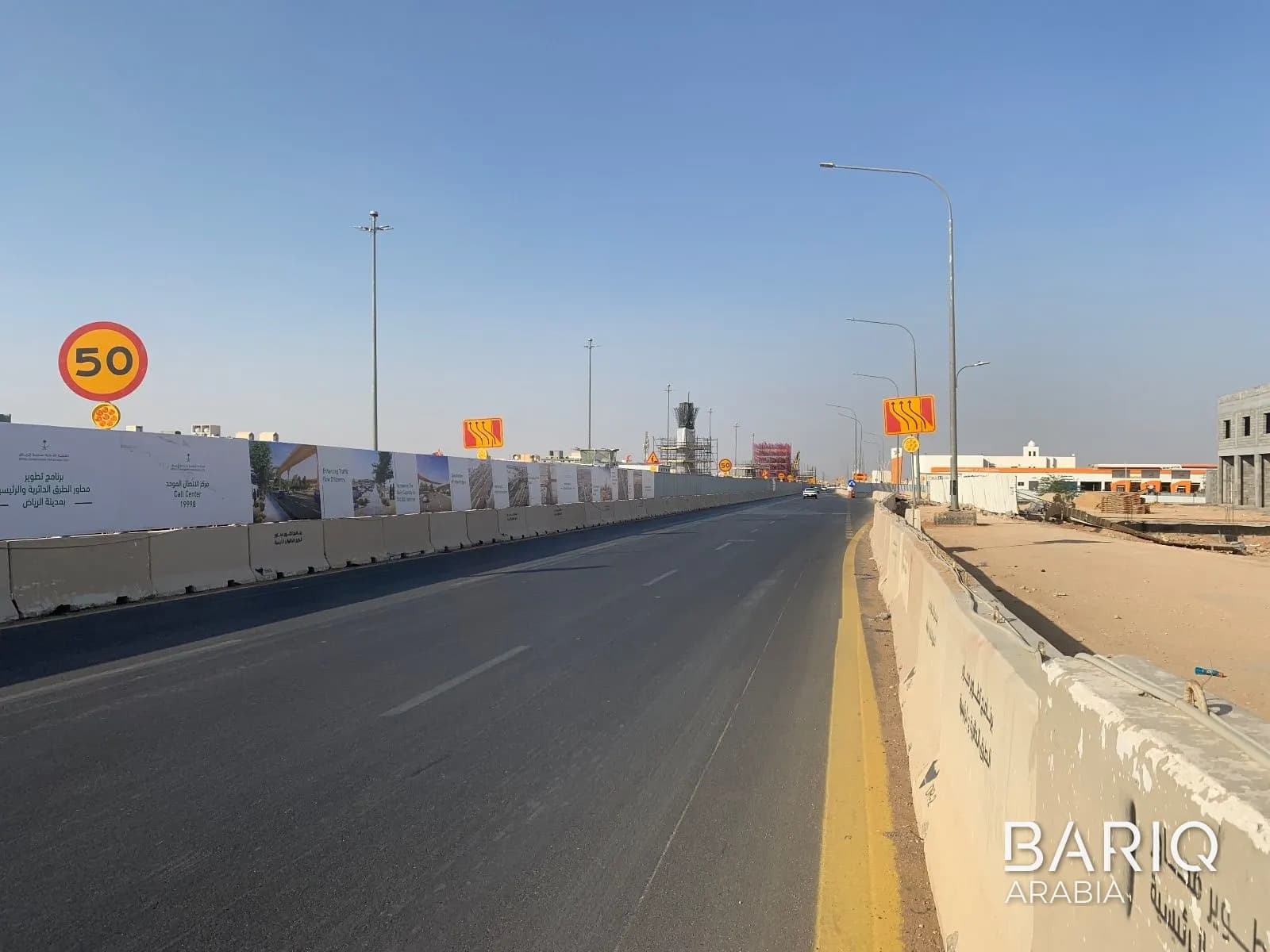
Precast reinforced-concrete units with the well-known “New Jersey” profile: a wide base and a sloped lower face that steers a vehicle's wheels back into its lane instead of stopping it dead. Placed end to end they form a continuous line; their weight keeps them stable beside traffic; they are lifted and moved by crane or forklift and reused across many projects.
Typical uses: traffic diversions on road projects, separating the work zone from traffic, temporary medians, road-project perimeters, and as a base for hoarding panels.
What other barrier types are there?
- Water-filled plastic barriers: light enough to move by hand and filled with water on site; suited to guiding pedestrians and slow traffic, and to short works. Many are channelising devices rather than crash-tested protective barriers, so check the product's rating before using it beside fast traffic, and keep an eye on filling and stability.
- Steel guardrail: corrugated steel beams on posts, mostly used as permanent protection along road edges and bridges. It needs space behind it to deflect on impact, and frequent relocation is harder than with concrete barriers.
- Parking wheel stops: small low units that stop a car's wheels in a parking bay; not a traffic barrier.
- Concrete blocks and bollards for plazas: keep vehicles off pavements, plazas and building entrances.
Quick comparison
| Type | Suits | Strength | Limits |
|---|---|---|---|
| Concrete New Jersey barriers | Diversions and work zones beside traffic, longer works | Stable and durable, reused many times, carries hoarding panels | Needs a crane to move and trucks to transport |
| Water-filled plastic barriers | Guiding pedestrians, low speeds, short works | Light, quick to place and move | Many are not crash-tested, can shift, need water checks |
| Steel guardrail | Permanent protection on road edges and bridges | Established permanent system | Installed on posts; not suited to frequent moves |
| Parking wheel stops | Car parks | Simple and easy to install | Not a traffic barrier |
How to choose the barrier type for your project
- Start from the approved traffic management plan and the consultant's specification; they often set the barrier type.
- Speed and volume of traffic beside the line: the faster it is, the more you need a barrier that redirects a vehicle rather than a guidance device.
- Space behind the barrier: barriers deflect on impact, so the space behind must allow for it before the work zone begins.
- Duration: concrete barriers suit longer works, plastic ones short works.
- How often the line moves with the diversion phases.
- Will hoarding panels be mounted on the barriers?
- Night visibility: reflective markers on the barriers, and lighting where needed.
Can concrete barriers serve as a construction-site fence?
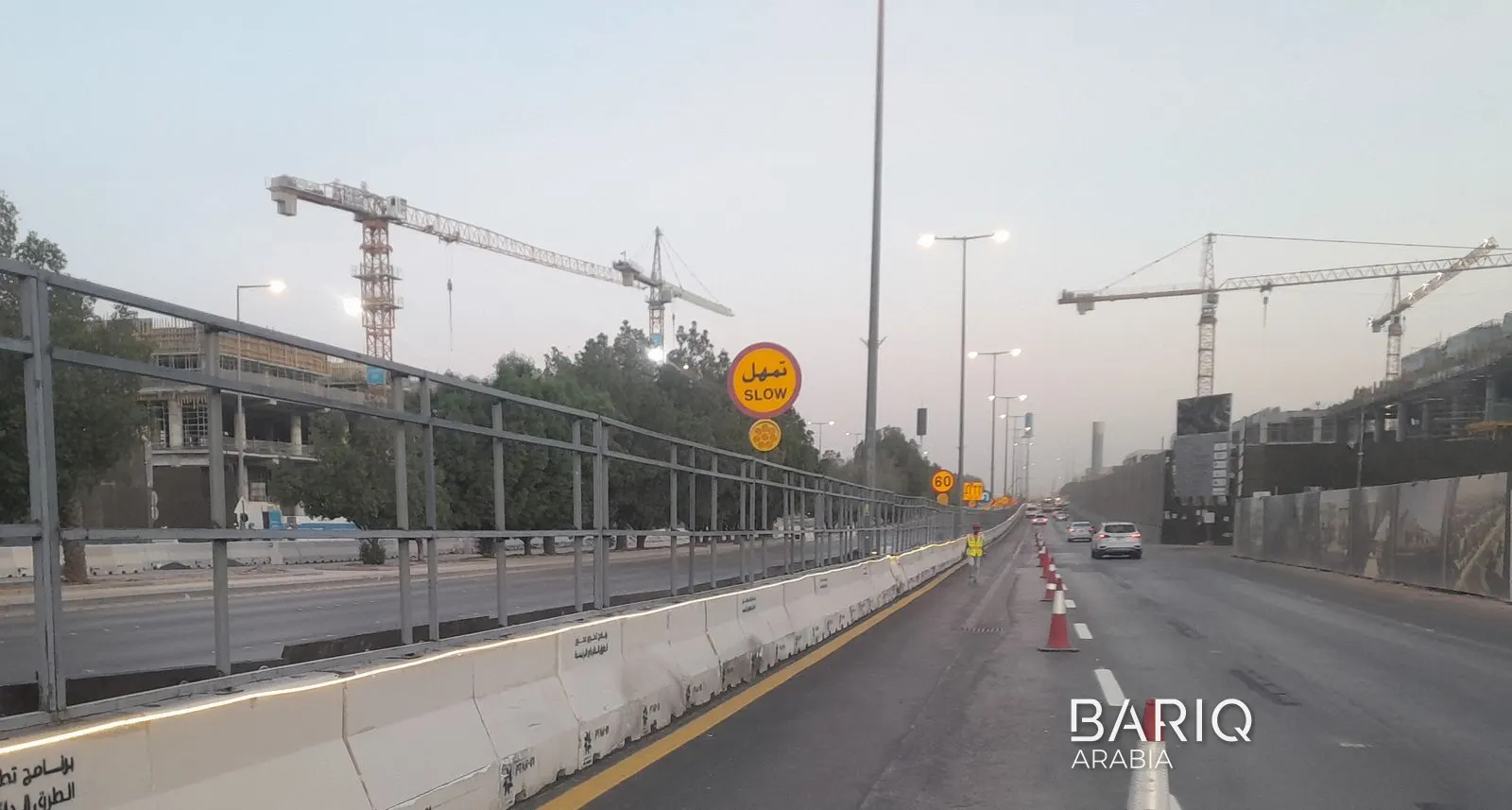
No. The construction-site fencing guide does not allow concrete barriers, wire mesh or fabric screens as a building-site fence. On road projects, barriers separate the traffic and a fence is mounted on top of them to screen the works, as in the photo.
What sets the price of New Jersey barriers?
We sell New Jersey barriers made at our Riyadh factory, and deliver, place and relocate them as diversions change when needed. We do not rent them out.
The price depends on the number of barriers or the line length, the distance to site, night placement by crane beside traffic, how many relocations you need, reflective markers, and hoarding panels on top if you need them.
New Jersey barriers from our Riyadh factoryBarrier dimensions and weights
Dimensions and weights vary between manufacturers and project specifications, and the consultant may require a particular size. Ask the supplier for written data: dimensions, weight, concrete grade, reinforcement, how the units connect, and earlier projects that used them. Message us on WhatsApp and we'll send the dimensions and weight of our barriers.
Our New Jersey barrier projects
- New Jersey barriers for the Dirab Road development in Riyadh: cast, supplied and placed along the road.
- King Khalid Road, Diriyah: we supplied New Jersey barriers and installed printed, lit hoarding on top of them.